Trees can be an important part of a garden, providing shade, privacy and visual appeal. However, there are situations where a tree may become unsuitable for its location or deteriorate to the point where removal is the most appropriate option.
Tree felling is a specialist form of tree surgery that requires careful planning and controlled work. For homeowners in Brockworth, Gloucestershire, understanding when tree removal may be necessary and what the process involves can help them make informed decisions about tree care.
When Is Tree Felling Necessary?
Tree felling is usually considered when a tree has become seriously damaged, is dead or has significant structural problems. However, removal should not automatically be the first option. In some cases, pruning or other tree surgery techniques may address the problem while allowing the tree to remain.
Common reasons for considering tree felling include:
- Significant structural damage to the trunk or major branches
- Extensive decay or deterioration
- A dead or severely declining tree
- Serious storm damage
- Major root problems affecting stability
- A tree that has become unsuitable for its available space
- Structural defects that cannot be effectively managed through pruning
A professional assessment can help determine whether felling is appropriate or whether another form of tree surgery could provide a suitable solution.
Signs That a Tree May Need Removal
Certain visible changes can indicate that a tree requires professional attention. Large cracks in the trunk, extensive deadwood, significant cavities, fungal growth and damaged roots can all warrant closer inspection.
A noticeable lean may also require assessment, particularly if it has developed recently or is accompanied by other signs of structural deterioration.
These signs do not necessarily mean that the tree must be removed. The condition, location and overall structure of the tree need to be considered before deciding on the appropriate work.
What Does the Tree Felling Process Involve?
Professional tree felling begins with an assessment of the tree and its surroundings. The tree’s size, condition, structure and position are considered alongside nearby buildings, fences, gardens and other potential obstacles.
The available working space is also important. Where there is sufficient room, a suitable tree may be carefully felled in a controlled direction. However, many residential trees are located close to structures or other obstacles, making a straightforward fell unsuitable.
In these situations, the tree may need to be dismantled in sections. Branches and sections of the trunk can be removed progressively using appropriate equipment and controlled techniques.
Why Controlled Tree Removal Matters
Trees can behave unpredictably when they are damaged, decayed or under structural stress. Even apparently straightforward work can involve significant weight and movement.
Controlled removal allows each section to be managed carefully rather than relying on the tree falling as a single piece. This is particularly important in gardens where buildings, walls, fences and other features are located close to the tree.
Professional tree surgeons can assess the site and select an appropriate method based on the specific conditions.
What Happens After a Tree Is Felled?
Once the main tree has been removed, the remaining timber and branches need to be dealt with appropriately. Depending on the requirements of the project, branches may be processed and the trunk sections removed.
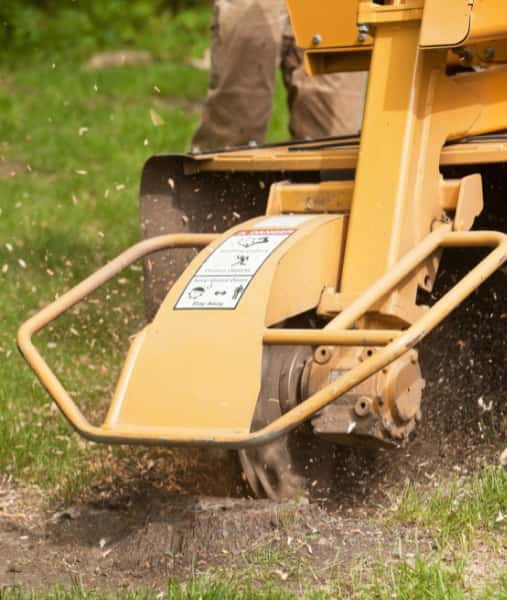
The remaining stump can also be considered separately. Stumps can take up valuable garden space and may make future landscaping or planting more difficult. Where required, stump removal or grinding can be discussed as part of the overall tree work.
Should You Always Remove a Problem Tree?
Not necessarily. Some trees with damaged or overgrown branches may be suitable for pruning, crown reduction or deadwood removal instead of complete felling.
This is why a professional assessment is valuable. Removing a tree unnecessarily can permanently change the character of a garden, while leaving a seriously compromised tree untreated may create ongoing concerns.
The appropriate solution should be based on the tree’s condition, location and specific circumstances.
Professional Tree Felling in Brockworth
Tree felling requires more than simply cutting through a trunk. Proper assessment, planning, equipment and controlled removal techniques are important for completing the work effectively.
EM Tree Surgery Brockworth provides professional tree felling and tree surgery services in Brockworth, Gloucestershire. Each tree can be assessed according to its condition, position and surrounding environment before suitable work is recommended.
Conclusion
Tree felling may be necessary when a tree is dead, seriously damaged, structurally compromised or no longer suitable for its location. However, removal should be considered alongside other tree surgery options where appropriate.
If you have concerns about a tree on your property in Brockworth, Gloucestershire, contact EM Tree Surgery Brockworth to arrange a professional assessment and discuss the most suitable tree surgery solution.
Call us on: 01452 941 558
Click here to find out more about EM Tree Surgery Brockworth
Click here to complete our contact form and see how we can help with your tree needs.